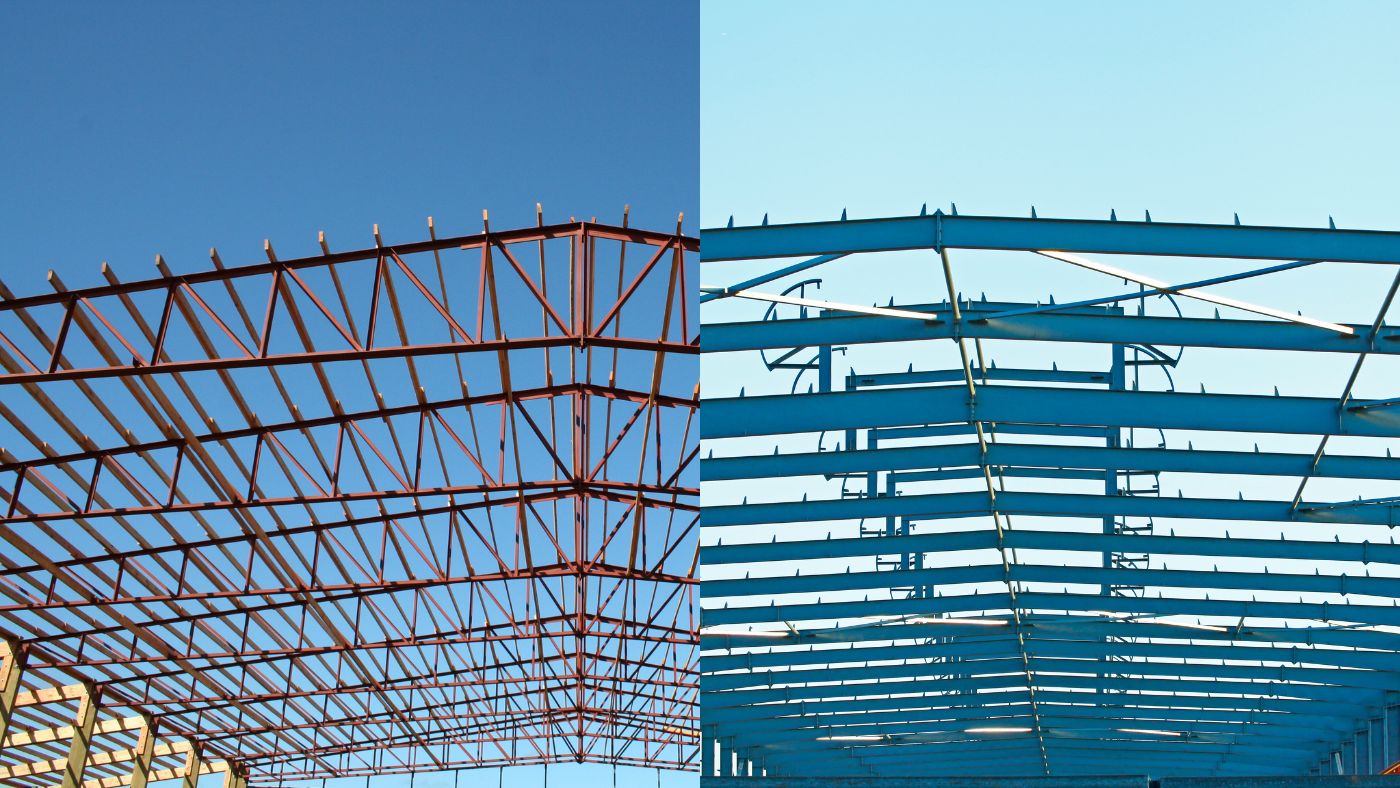
In the construction industry, particularly for industrial buildings such as factories, workshops, and hangars, pre-engineered steel buildings (PEBs) and traditional trusses are popular options. The decision between PEBs and trusses is typically based on a thorough evaluation of cost, construction time, and quality. This article will explore the advantages of pre-engineered steel buildings over traditional trusses.
Speed of Construction
One of the outstanding advantages of pre-engineered steel buildings is that production is carried out entirely at the factory using modern and precise production equipment, which saves a lot of time. The components are pre-fabricated with connecting details, allowing workers to quickly assemble them at the construction site using bolts, reducing construction time significantly.
In contrast, truss systems require more on-site labor and time to assemble. The process involves cutting, welding, and fitting trusses individually, which can be labor-intensive and time-consuming. This slower pace can delay project completion, affecting the overall schedule and budget.
Cost Efficiency
Pre-engineered buildings is cost-effective due to their streamlined production process. The materials are ordered in bulk, and the fabrication process is optimized for minimal waste. Additionally, the reduced construction time translates to lower labor costs and fewer on-site expenditures.
On the other hand, truss systems often incur higher costs due to the extensive labor required for on-site assembly. The need for specialized labor and equipment to handle and install trusses adds to the overall project cost. Furthermore, the potential for material wastage and on-site adjustments can inflate the budget.
Design Flexibility
Pre-engineered buildings offer remarkable design flexibility. Advanced software allows engineers to customize the design to meet specific requirements, including unique architectural features, varying spans, and different load conditions. The ability to tailor designs ensures that PEBs can be adapted for various applications, from industrial warehouses to commercial complexes.
Truss systems, while versatile, have limitations in design flexibility. The need for additional supports and braces to maintain structural integrity can restrict the architectural design. Modifying truss systems to accommodate specific design features often leads to increased complexity and costs.
Structural Integrity and Durability
Steel buildings constructed using pre-engineered methods are renowned for their structural integrity and durability. The components are designed to meet stringent industry standards, ensuring they can withstand harsh environmental conditions, seismic activity, and heavy loads. The precise engineering and quality control in steel fabrication guarantee long-lasting, reliable structures.
Truss systems, although strong, may not offer the same level of durability as pre-engineered buildings. The reliance on on-site assembly introduces variables that can affect the overall strength and longevity of the structure. Inconsistencies in welding and fitting can lead to weaknesses that compromise the building's performance over time.
Reduced Maintenance
Pre-engineered steel buildings manufactured in factories benefit from rigorous quality control and are unaffected by weather conditions during production. The components are painted before leaving the factory, providing surface protection and minimizing maintenance needs.
In contrast, trusses are typically manufactured on-site with numerous manual welds, which are prone to errors. Painting these structures for protection is more challenging, complicating quality control. Frequent inspections and repairs are often required, leading to higher long-term maintenance costs and inconvenience, potentially disrupting building operations.
Environmental Impact
Steel fabrication for pre-engineered buildings is an environmentally friendly process. The use of recycled steel, efficient manufacturing techniques, and reduced waste contribute to a lower carbon footprint. The quick construction time also minimizes the environmental disruption on-site.
In comparison, truss systems may generate more waste and environmental impact due to the extensive on-site work and potential material wastage. The longer construction period also prolongs the environmental disturbance.
Conclusion
In conclusion, pre-engineered buildings offer numerous advantages over traditional truss systems, particularly in terms of speed, cost efficiency, design flexibility, structural integrity, maintenance, and environmental impact. For projects requiring reliable, durable, and efficient steel buildings, pre-engineered solutions are the superior choice, leveraging advanced steel fabrication techniques to deliver exceptional results.