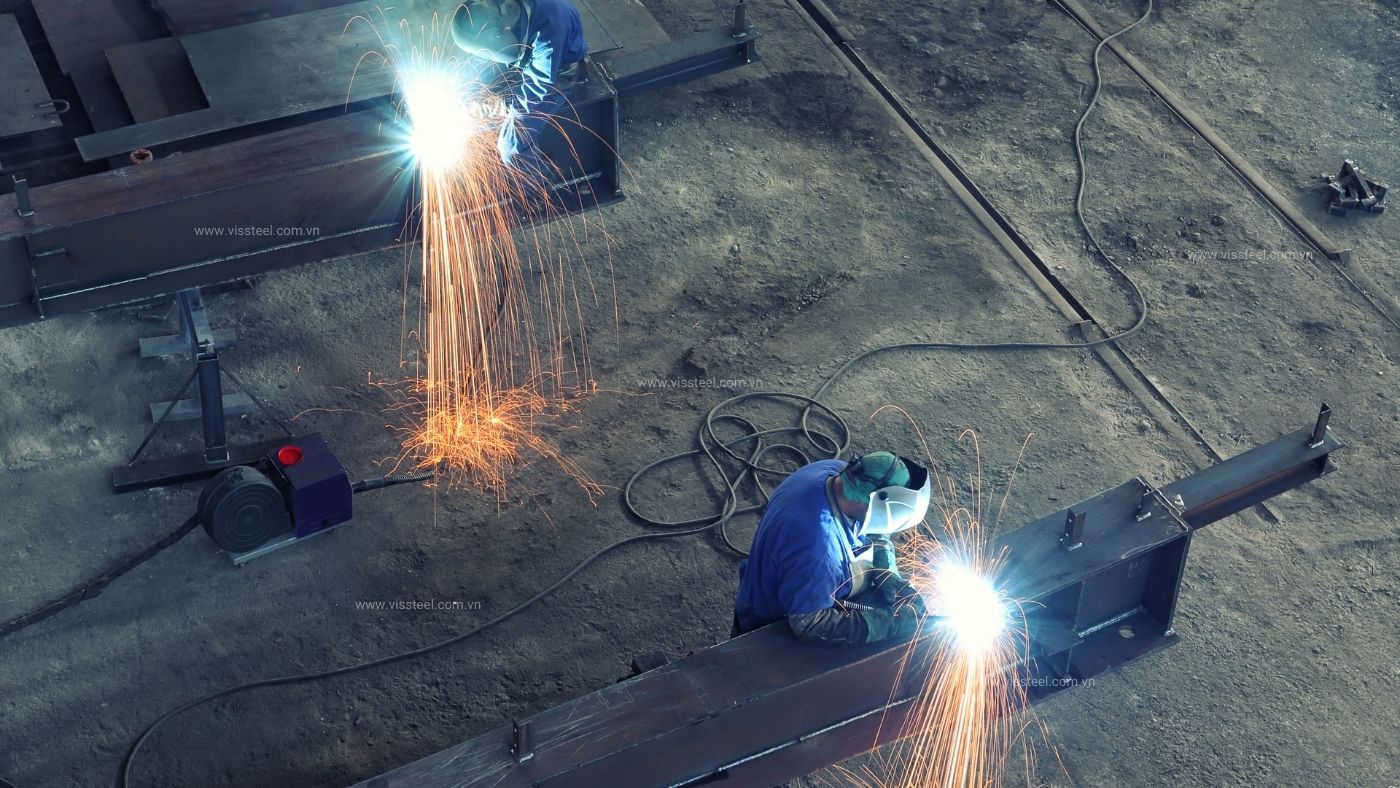
Welding plays a crucial role in the construction of steel structures. As a fundamental process in steel fabrication, welding ensures the integrity, strength, and durability of steel components, making it indispensable for construction projects. This article explores the importance of welding in steel structures, highlighting its impact on quality and efficiency.
The Importance of Welding in Steel Structures
Steel structures rely heavily on welding to join individual steel components into a cohesive and robust framework. Welding is the process of fusing two or more pieces of metal together by applying heat, pressure, or both, creating a permanent bond. This process is vital in the construction of various steel structures, including bridges, skyscrapers, industrial facilities, and more.
1. Strength and Durability
Welding provides superior strength and durability compared to other joining methods like bolting or riveting. Welded joints are often as strong as or stronger than the base metal, ensuring that steel structures can withstand significant loads and stresses. This is particularly important in steel buildings, where structural integrity is paramount.
2. Flexibility in Design
Welding allows for greater flexibility in design and construction. Complex steel structures with intricate geometries can be fabricated efficiently using welding techniques. This flexibility enables architects and engineers to create innovative and aesthetically pleasing steel buildings that meet specific project requirements.
3. Efficiency and Speed
Welding contributes to the efficiency and speed of steel fabrication and construction processes. Automated welding techniques, such as robotic welding, enhance productivity by performing precise and consistent welds at a faster rate than manual methods. This efficiency is crucial in large-scale projects where time and cost savings are essential.
Welding Techniques in Steel Fabrication
Several welding techniques are employed in steel fabrication, each with its advantages and applications. The choice of technique depends on factors such as the type of steel, the thickness of the materials, and the specific requirements of the project.
1. Shielded Metal Arc Welding (SMAW)
Also known as stick welding, SMAW is a versatile and widely used technique in steel fabrication. It is suitable for welding thick materials and is commonly used in construction and repair work for steel structures.
2. Gas Metal Arc Welding (GMAW)
Also known as MIG welding, GMAW is ideal for welding thinner materials and offers high deposition rates. This technique is often used in the fabrication of steel buildings where precision and speed are critical.
3. Gas Tungsten Arc Welding (GTAW)
Also known as TIG welding, GTAW provides excellent weld quality and is used for welding thin materials and critical joints. It is often employed in projects requiring high precision and aesthetic appeal.
4. Flux-Cored Arc Welding (FCAW)
FCAW is similar to GMAW but uses a flux-cored wire, making it suitable for welding thicker materials and for applications where high deposition rates are needed. It is commonly used in the construction of heavy steel structures.
Ensuring Quality and Safety
Quality and safety are paramount in steel fabrication and construction. Welding standards and codes, such as those established by the American Welding Society (AWS) and the International Organization for Standardization (ISO), ensure that welds meet stringent quality and safety requirements. Adhering to these standards helps prevent defects and failures, ensuring the long-term performance of steel structures.
Conclusion
In conclusion, welding is a cornerstone of steel fabrication, playing a vital role in the construction of steel structures. Its ability to provide strong, durable, and flexible joints makes it indispensable for modern construction projects. As technology advances, welding techniques continue to evolve, further enhancing the efficiency, quality, and innovation in the steel fabrication industry. Understanding the role of welding in this context highlights its importance and underscores the need for skilled welders and adherence to industry standards to ensure the success of construction projects.