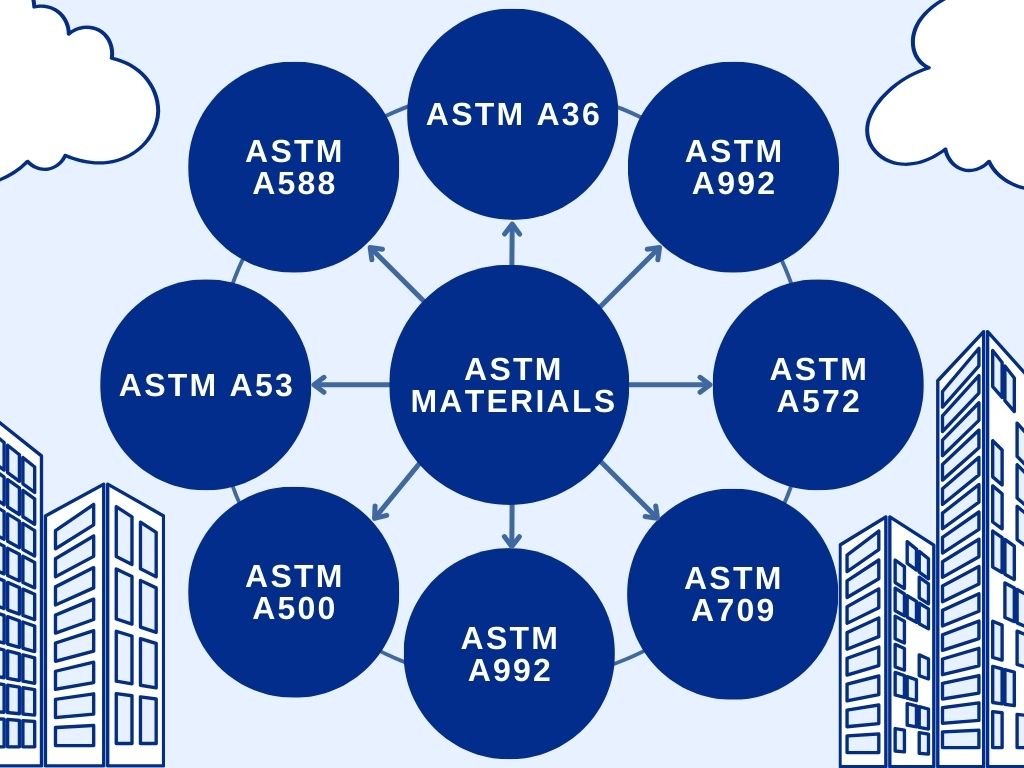
Structural steel is the backbone of modern construction, providing strength, durability, and flexibility to a wide range of projects. The American Society for Testing and Materials (ASTM) sets the standards for the materials used in steel buildings and steel structures. Here, we explore the seven most popular ASTM materials in structural steel, highlighting their applications and benefits.
1. ASTM A36
Overview: ASTM A36 is one of the most commonly used structural steel grades. It has a minimum yield strength of 36,000 psi and is known for its excellent weldability and machinability.
Applications: Widely used in steel buildings, bridges, and general structural purposes, A36 steel is versatile and economical. Its properties make it ideal for welding, bolting, and riveting.
2. ASTM A992
Overview: A992 steel is preferred for its high strength and excellent weldability. It has a minimum yield strength of 50,000 psi and is particularly used in wide-flange beams.
Applications: This material is essential in the construction of steel structures, particularly in high-rise buildings and other large-scale projects where strength and reliability are paramount.
3. ASTM A572
Overview: Available in multiple grades (42, 50, 55, 60, 65), ASTM A572 offers high strength with improved resistance to atmospheric corrosion. Grade 50 is the most widely used.
Applications: A572 is commonly used in the construction of bridges, buildings, and other structures that require a higher strength-to-weight ratio.
4. ASTM A500
Overview: A500 is a cold-formed welded and seamless carbon steel structural tubing in round, square, and rectangular shapes. It is available in Grades A, B, C, and D.
Applications: This material is often used for structural support in buildings, bridges, and other load-bearing applications. Its shape and high strength make it ideal for columns and structural framing.
5. ASTM A53
Overview: A53 covers seamless and welded black and hot-dipped galvanized steel pipe. It is suitable for welding, bending, and forming.
Applications: While primarily used for mechanical and pressure applications, A53 is also utilized in structural steel design, particularly in steel buildings that require durable piping systems.
6. ASTM A588
Overview: Known for its high strength and weathering properties, A588 has a yield strength of at least 50,000 psi. It develops a stable rust-like appearance after exposure to weather.
Applications: A588 is ideal for use in steel structures where high strength and enhanced corrosion resistance are needed. It is commonly used in bridges, building facades, and other exposed steel structures.
7. ASTM A992
Overview: This high-strength, low-alloy structural steel is known for its weldability, toughness, and corrosion resistance. It is specifically designed for use in building framing.
Applications: A992 is used extensively in the construction of steel buildings, particularly in areas where structural integrity and resistance to environmental factors are critical.
Conclusion
Understanding the different ASTM materials used in structural steel is essential for making informed decisions in steel design and fabrication. Each material offers unique properties that make it suitable for various applications in steel buildings and steel structures. By choosing the right ASTM material, engineers and builders can ensure that their projects meet the highest standards of safety, durability, and performance.
These materials form the foundation of modern steel fabrication, contributing to the strength and longevity of steel buildings around the world. As the industry continues to evolve, staying informed about these materials and their applications will remain crucial for success in steel design and construction.