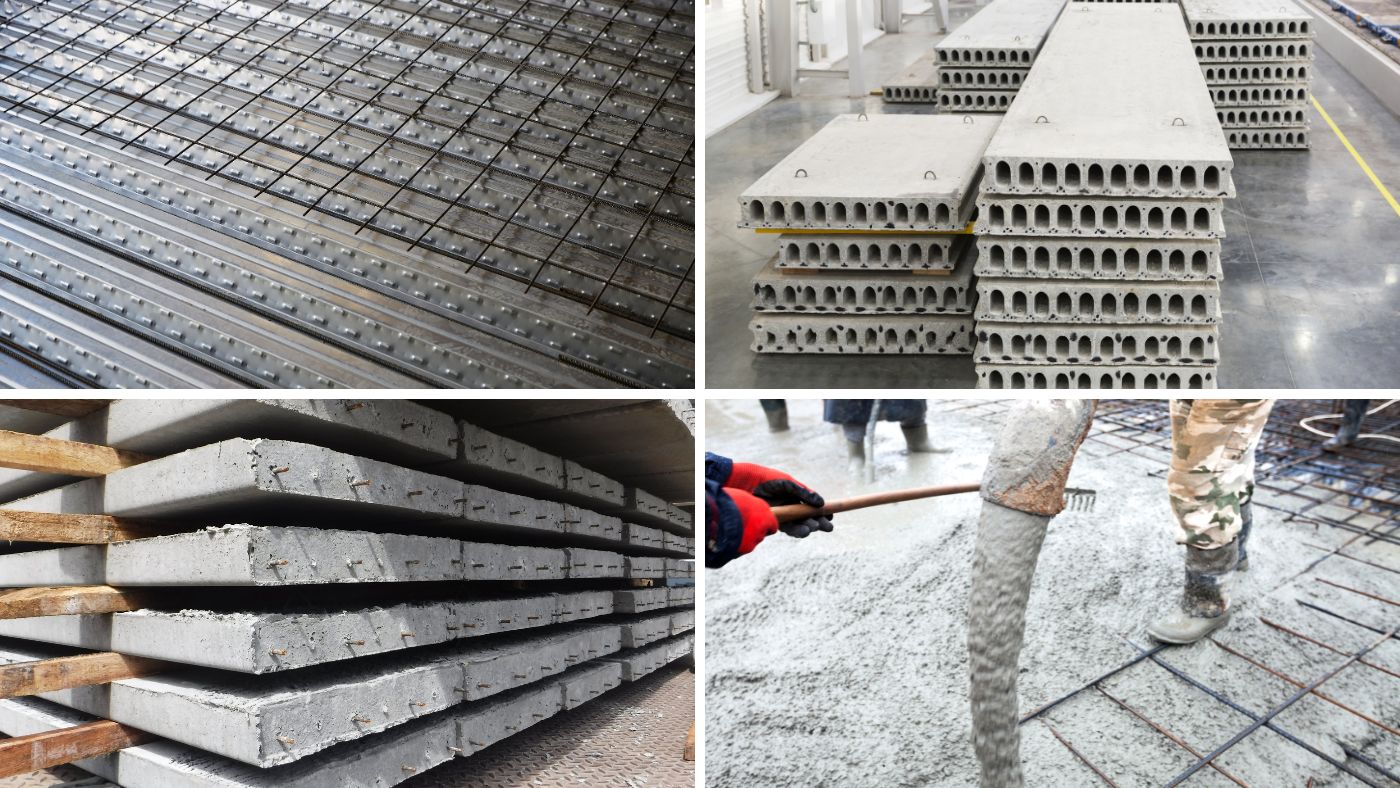
Steel buildings are becoming increasingly popular due to their strength, versatility, and cost-effectiveness. The type of slab used in these structures plays a crucial role in their overall performance and durability. Here, we explore the four most popular types of slabs used in steel buildings, highlighting their features, benefits, and applications.
1. Composite Slabs
Composite slabs are a favored choice in steel buildings due to their excellent structural performance and ease of construction. These slabs combine a concrete topping with a profiled steel decking, which acts as both a permanent formwork and tensile reinforcement.
Features:
- High load-bearing capacity
- Efficient construction process
- Improved fire resistance
Benefits:
- Reduces construction time and labor costs
- Provides a smooth, level surface
- Enhances overall structural integrity
Applications:
- High-rise buildings
- Commercial complexes
- Industrial facilities
Composite slabs are integral to steel structures, as they leverage the strengths of both steel and concrete, making them a robust and reliable flooring solution.
2. Precast Concrete Slabs
Precast concrete slabs are manufactured off-site and brought to the construction site ready for installation. These slabs are known for their high quality and precision, thanks to controlled manufacturing conditions.
Features:
- Uniform quality and consistency
- High durability and longevity
- Precision-engineered for specific applications
Benefits:
- Speedy construction with minimal on-site labor
- Reduced waste and environmental impact
- Excellent load distribution
Applications:
- Residential buildings
- Office buildings
- Warehouses
In steel buildings, precast concrete slabs are preferred for their rapid installation and consistent performance, significantly speeding up the construction timeline.
3. Hollow Core Slabs
Hollow core slabs are precast, prestressed concrete slabs with continuous voids running through their length. These voids reduce the weight of the slab without compromising its strength, making them ideal for use in steel buildings.
Features:
- Lightweight yet strong
- Prestressed for added strength
- Built-in voids for reduced weight
Benefits:
- Efficient use of materials
- Improved thermal and acoustic insulation
- Fast and easy installation
Applications:
- Multi-story residential buildings
- Parking structures
- Industrial buildings
Hollow core slabs are popular in steel structures due to their reduced weight, which lowers the overall load on the steel framework, providing an economical solution for large-scale projects.
4. Flat Slabs
Flat slabs are a type of reinforced concrete slab supported directly by columns without the use of beams. This design provides a clean, flat ceiling and simplifies the construction process.
Features:
- Beamless construction
- Flexible column placement
- Clean, flat ceiling appearance
Benefits:
- Efficient use of space
- Reduced floor-to-floor height
- Simplified formwork and construction process
Applications:
- Office buildings
- Shopping malls
- Hotels
Flat slabs are widely used in steel buildings for their ability to create open, column-free spaces, which are highly desirable in commercial and residential buildings.
Conclusion
Choosing the right type of slab is crucial for the success of any steel building project. Composite slabs, precast concrete slabs, hollow core slabs, and flat slabs each offer unique advantages that cater to different structural needs and project requirements. In steel structures, these slabs contribute significantly to the building’s overall performance, efficiency, and cost-effectiveness.
By understanding the features, benefits, and applications of each slab type, builders and engineers can make informed decisions that enhance the durability and functionality of their steel buildings.