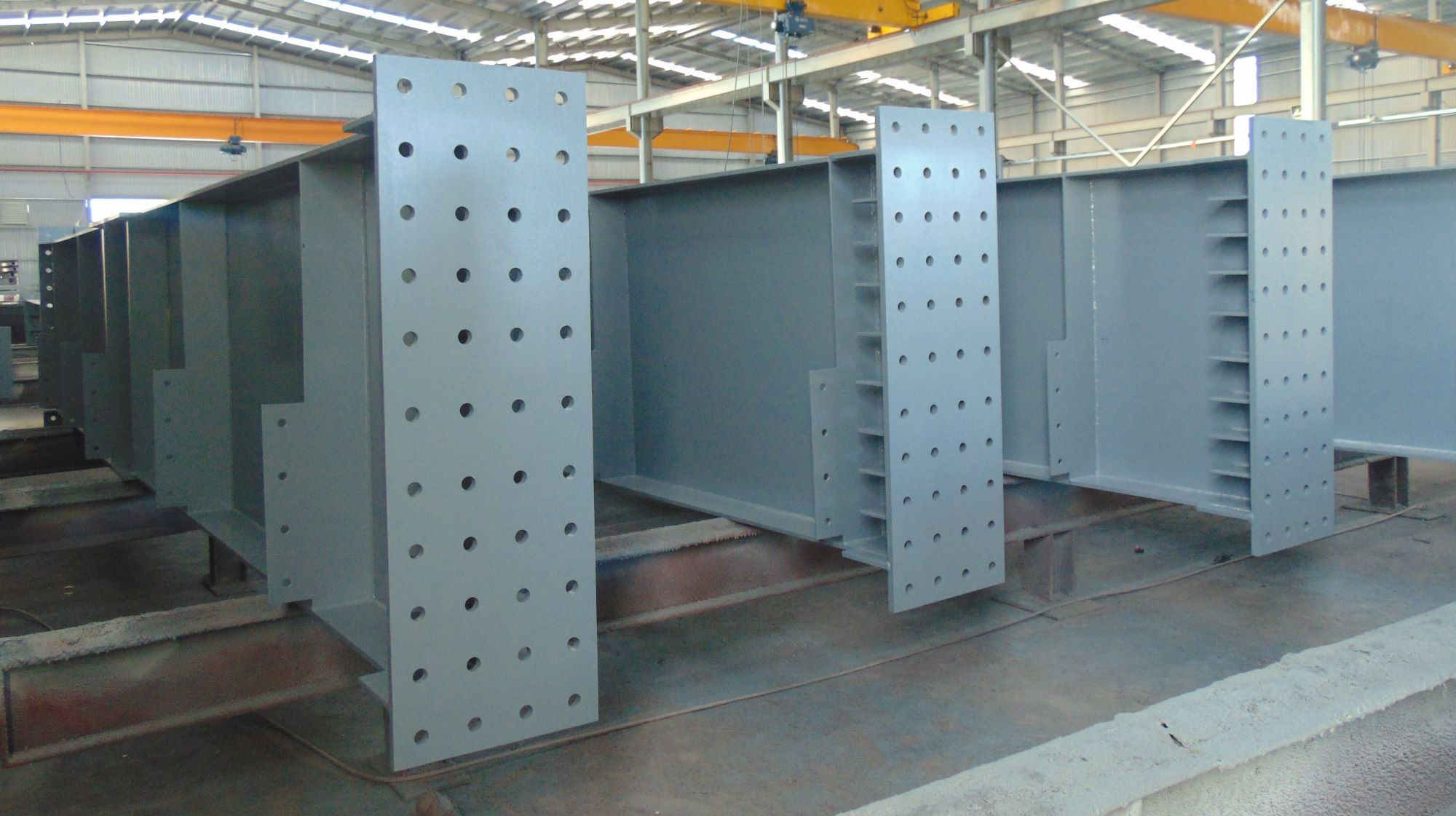
Unlike hot-rolled beams produced directly during the billet-making process, welded beams are assembled from steel plates and customized according to the specific requirements of various construction projects, with a variety of sizes that hot rolled beams may not available. The production of welded beams is quite straightforward, involving cutting steel plates, automatic welding, straightening beams, welding stiffeners and connection plates, surface cleaning, painting, and packaging.
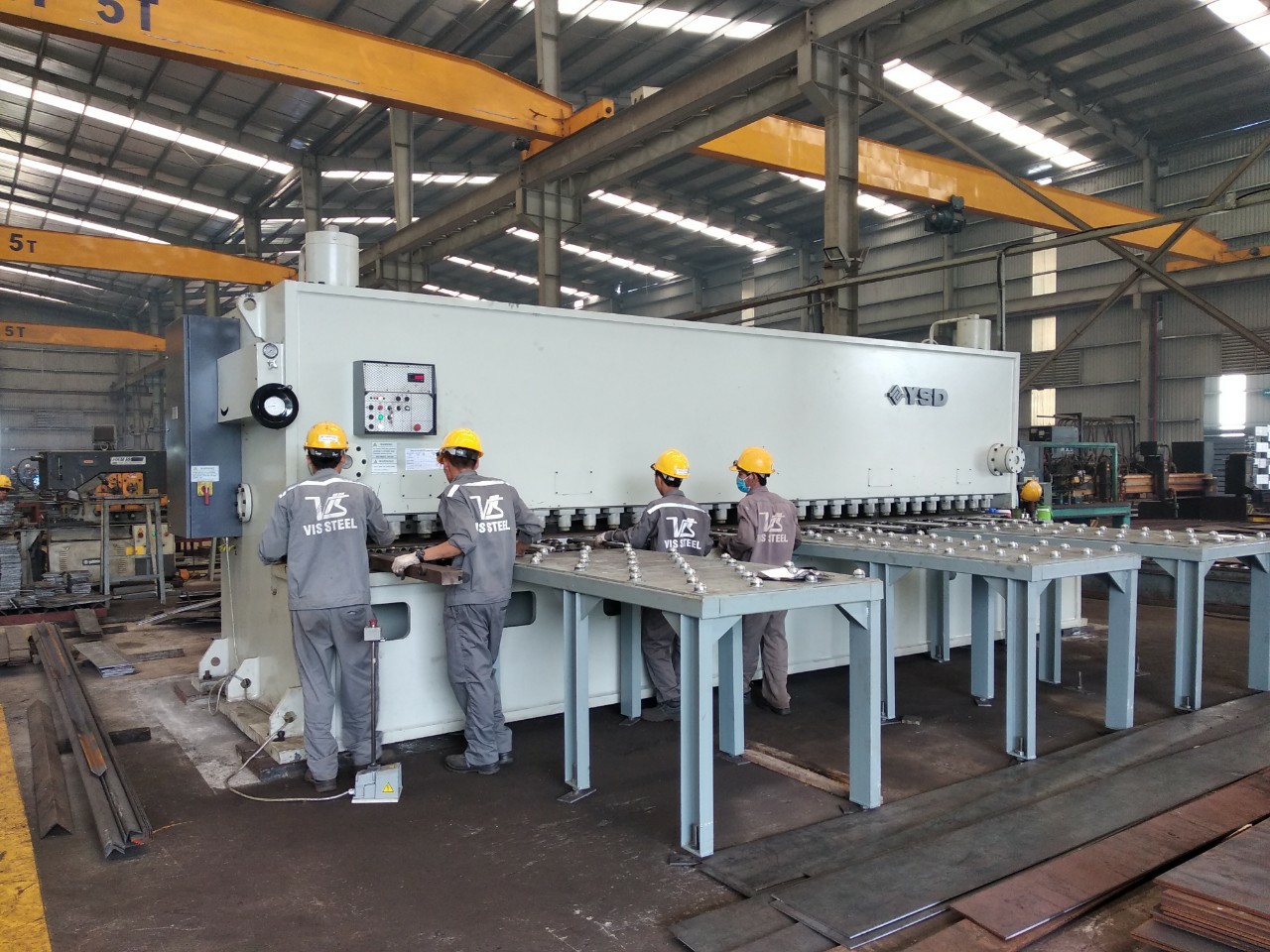
Cutting Steel Plates
Steel plates, typically produced in standard sizes of 2.0 meters in width and 6 or 12 meters in length, need to be cut to the desired dimensions. Shearing machines are used for plates up to 8mm thick. For thicker plates, high-power CNC plasma cutting machines are employed, as shearing is not feasible.
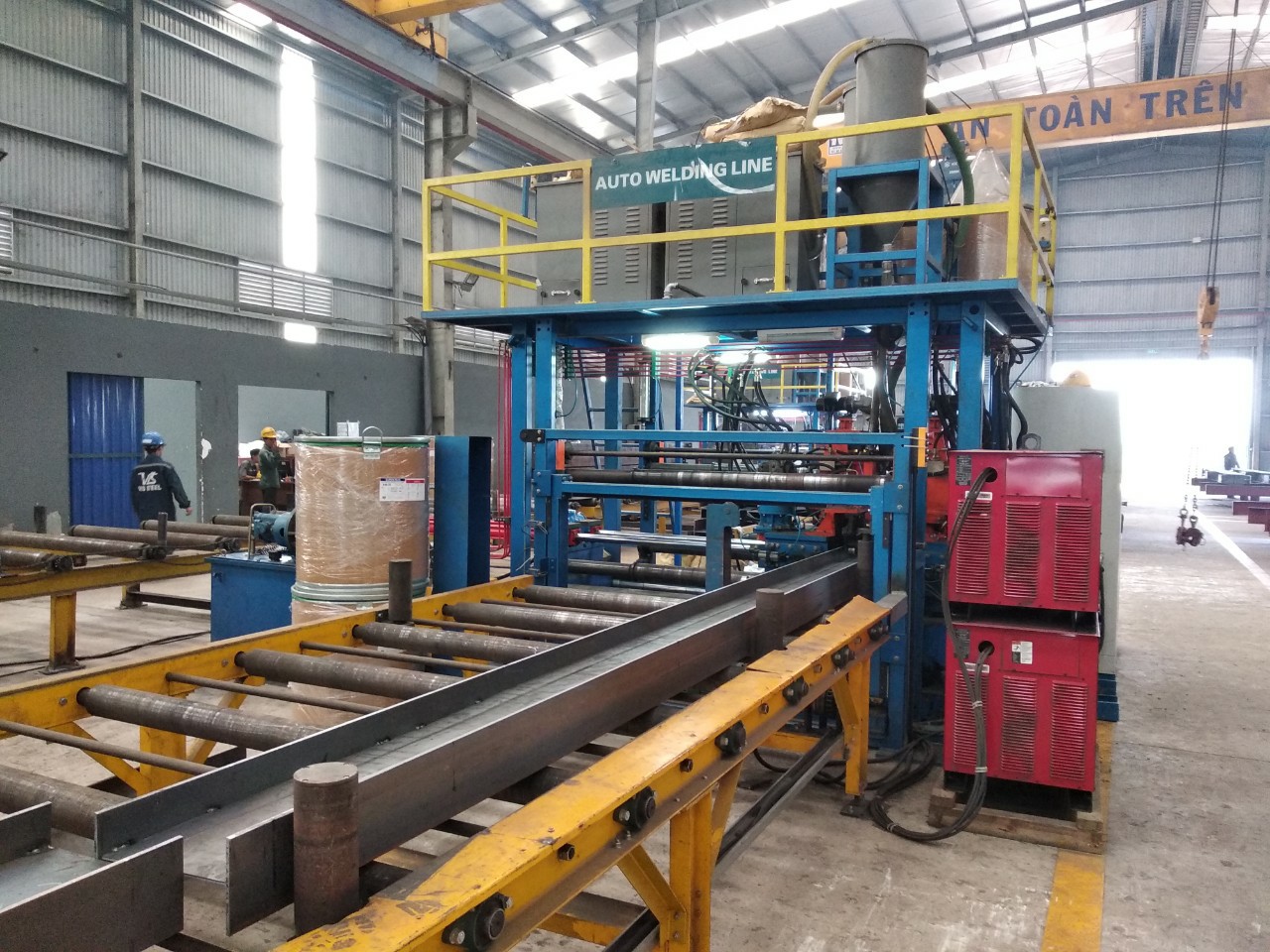
Automatic Welding
After cutting, the steel plates undergo automatic welding. In this stage, the plates are temporarily tacked together and then welded using automatic welding machines. This process ensures uniform, high-quality welds and minimizes human error.
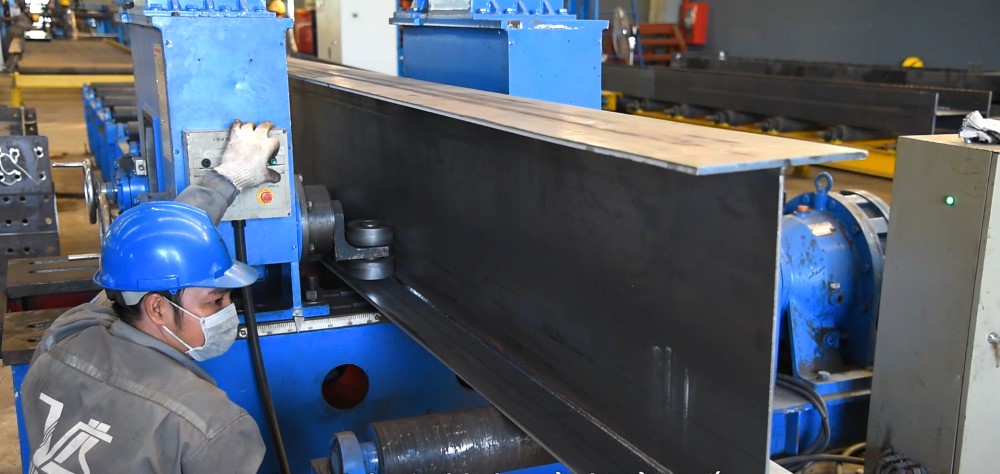
Straightening
Post-welding, the beams often require straightening to correct any deformations. Beam straightening machines are used to ensure each beam is perfectly aligned. This step is crucial to maintaining the structural integrity and correct alignment of the beams, which is essential for their performance during construction.
Adding Stiffeners and Connection Plates
This stage involves welding stiffeners and connection plates to the beams manually. Qualified welders perform this task according to the Welding Procedure Specification (WPS) such as AWS D1.1, AS/NZS 1554.1, or ISO 3834, depending on the specific requirements of each project.

Grinding
Once all welding processes are complete, the beams are ground to smooth out edges and round off any sharp corners left from the steel cutting process.
Shot Blasting
Steel inherently has many rust spots, dirt, sand, or oil residues left from production, transportation, and fabrication. Shot blasting effectively removes these impurities, leaving the steel surface clean and enhancing the adhesion for the subsequent painting process.
Painting
At this stage, the entire painting process is done manually and requires high skill, regular, and continuous application. Otherwise, the paint layer thickness will be uneven, and there will be pitting on the paint surface.

Conclusion
The fabrication of welded beams involves a series of meticulously coordinated steps to ensure high quality and structural integrity. From cutting and welding to straightening, adding necessary fittings, grinding, shot blasting, and painting, each stage is crucial. This comprehensive process ensures that the welded beams produced are of the highest standards, ready to meet the demands of various construction projects.