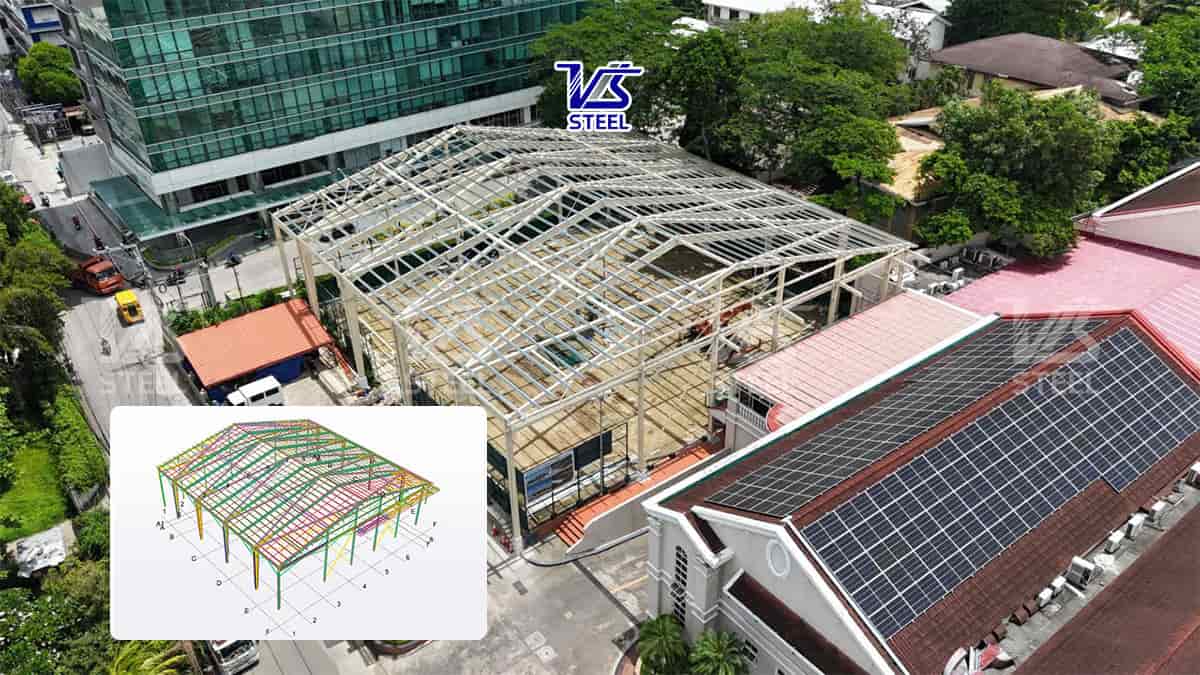
In factory construction, the span isn't just a technical detail. It's a key factor that determines the cost, performance, and safety of the entire building. A wrong decision can lead to huge waste and negatively affect your production process down the line. This article will help you understand what a factory span is and how to choose the best solution for your project.
The factory span (also known as the transverse bay) is the distance from the center of one column to the center of the opposite column along the width of the factory. In simpler terms, it's the width of the building without any supporting columns in the middle. Choosing the right span is crucial for creating a spacious, column-free workspace.
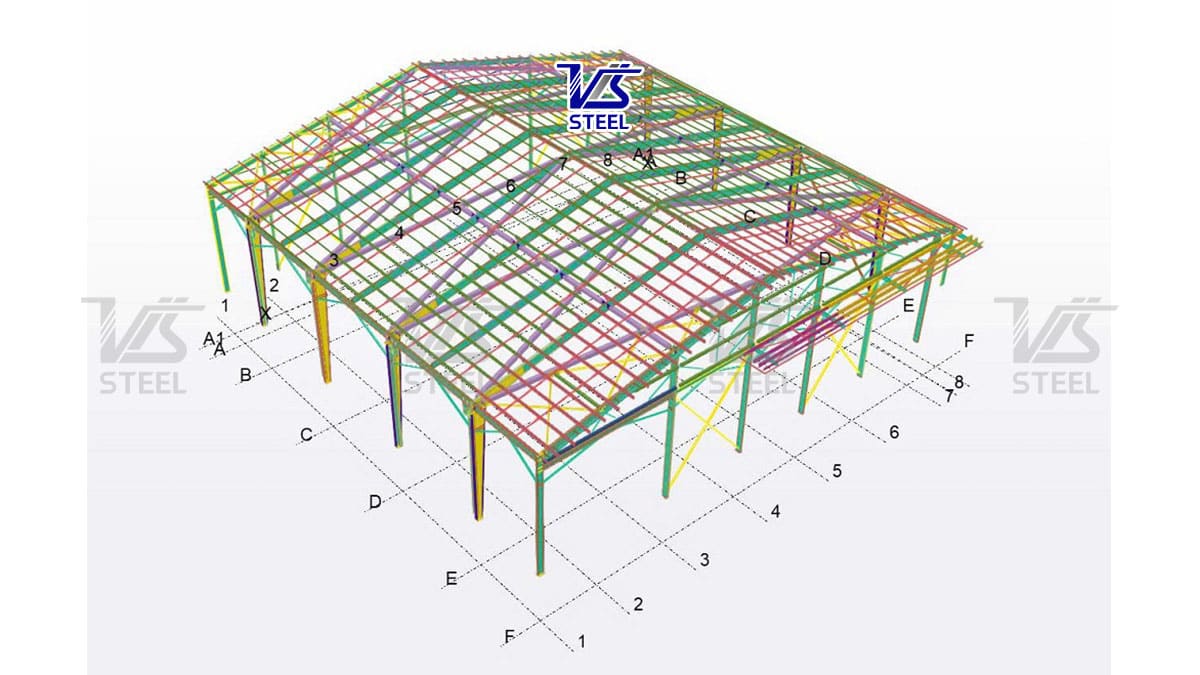
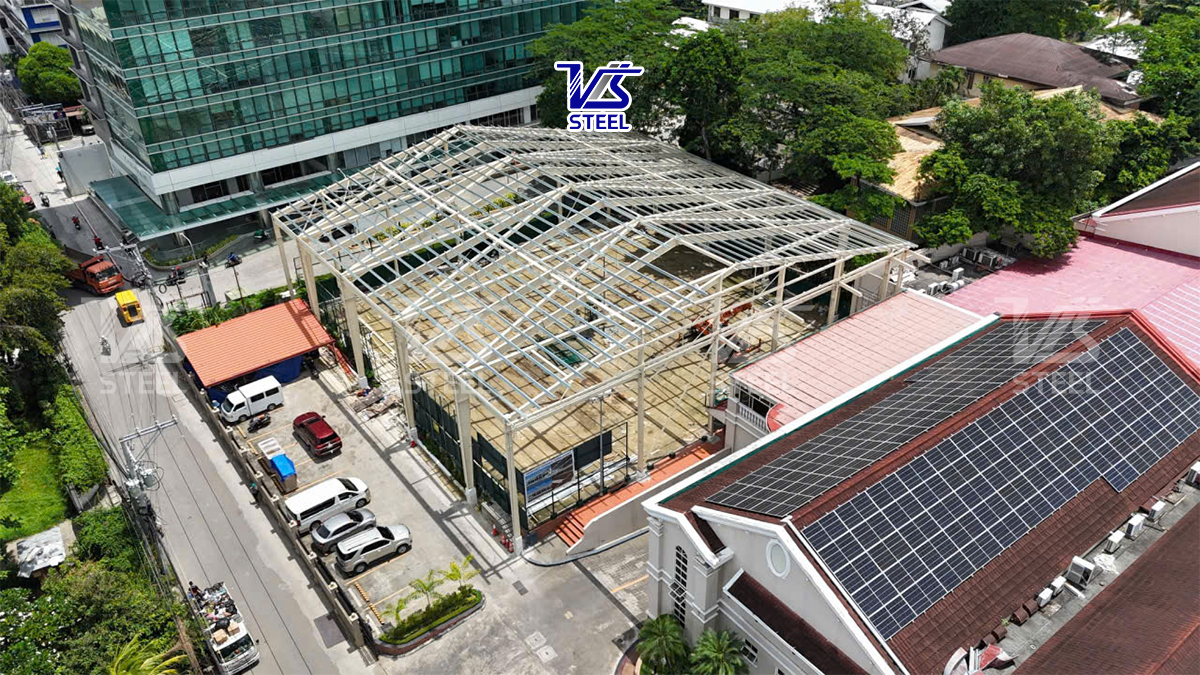
- Standard Spans: The most common spans are 12m, 15m, 18m, and 24m. These sizes are widely used because they optimize material costs and are easy to build.
- Large Spans: These are typically over 30m, sometimes reaching 60m or more. This type of span is used for specific projects that require very large production areas with no columns in the way.
Choosing a suitable span is one of the most effective ways to control your initial budget. As the span increases, steel components like beams and columns need to be larger and thicker to handle the load. This leads to a greater volume of steel and a significant increase in costs. Conversely, if the span is too small for your needs, you'll spend extra money on unnecessary columns and foundations, reducing the usable space.
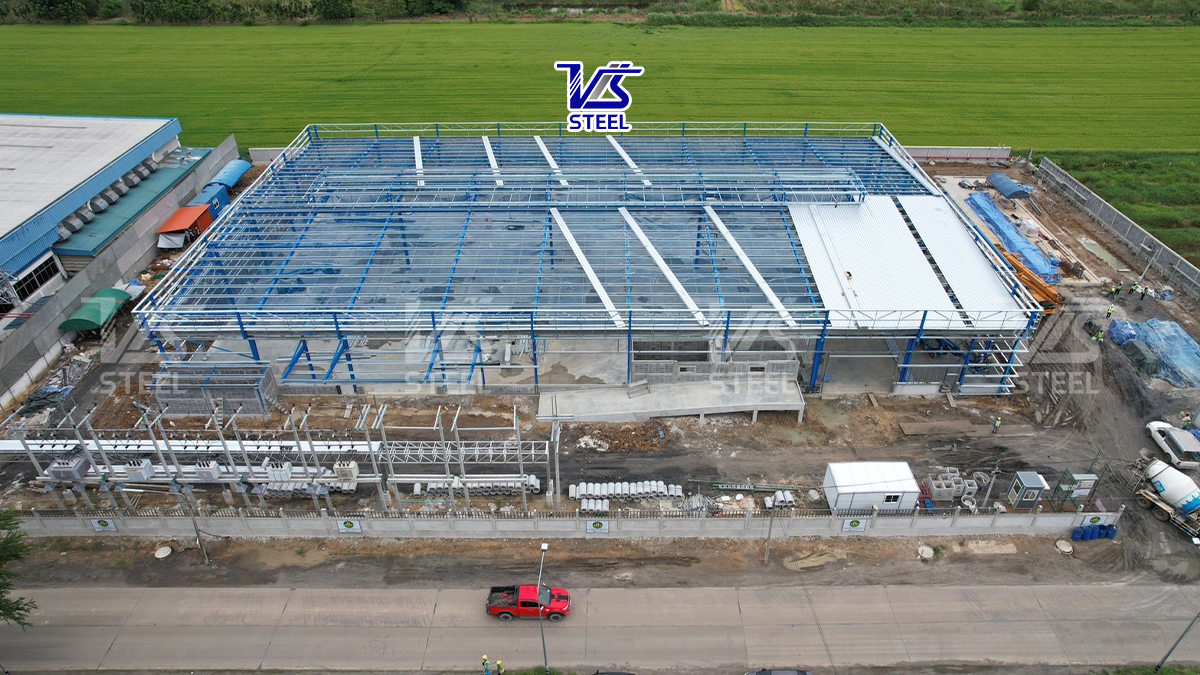
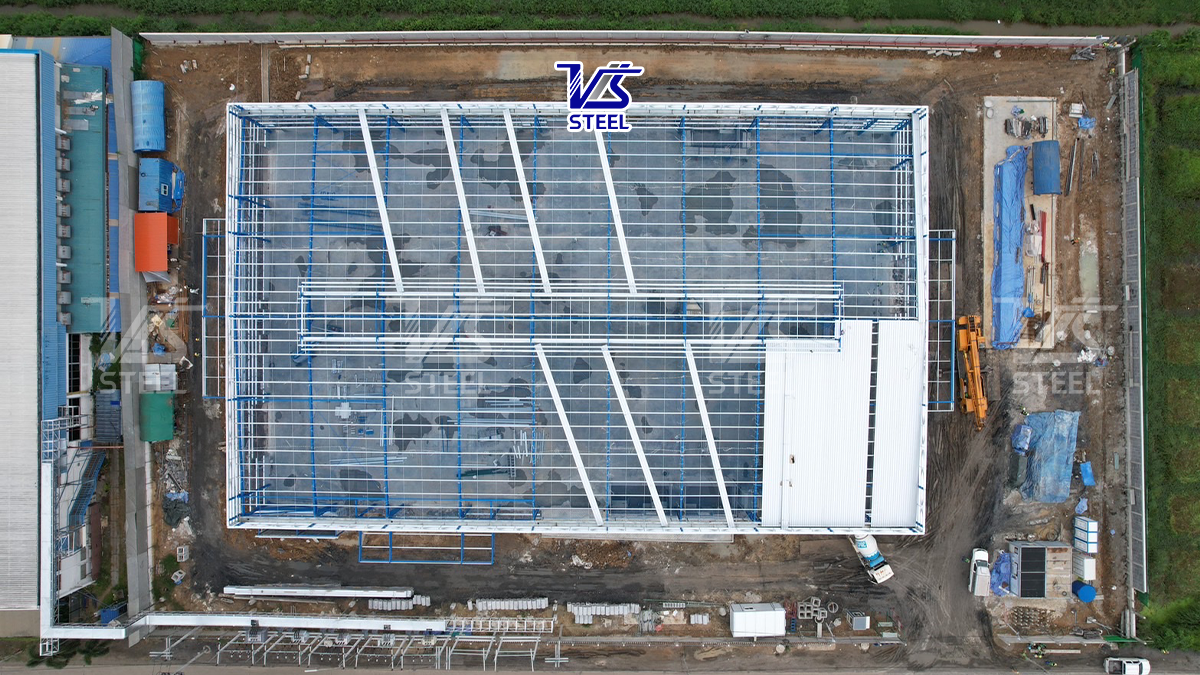
The span determines the interior space of the factory, directly affecting the layout of production lines, equipment placement, and pathways for workers and forklifts. A suitable span maximizes the usable area, allows for flexible arrangement and equipment upgrades, and ensures a smooth and efficient production flow.
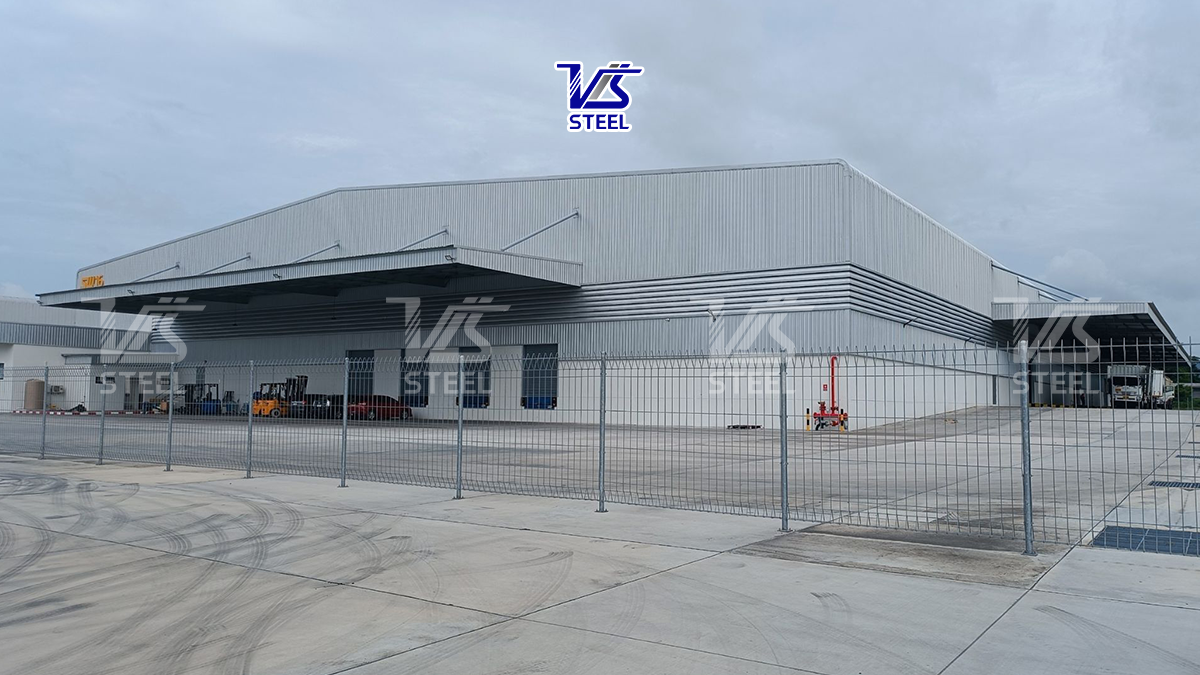
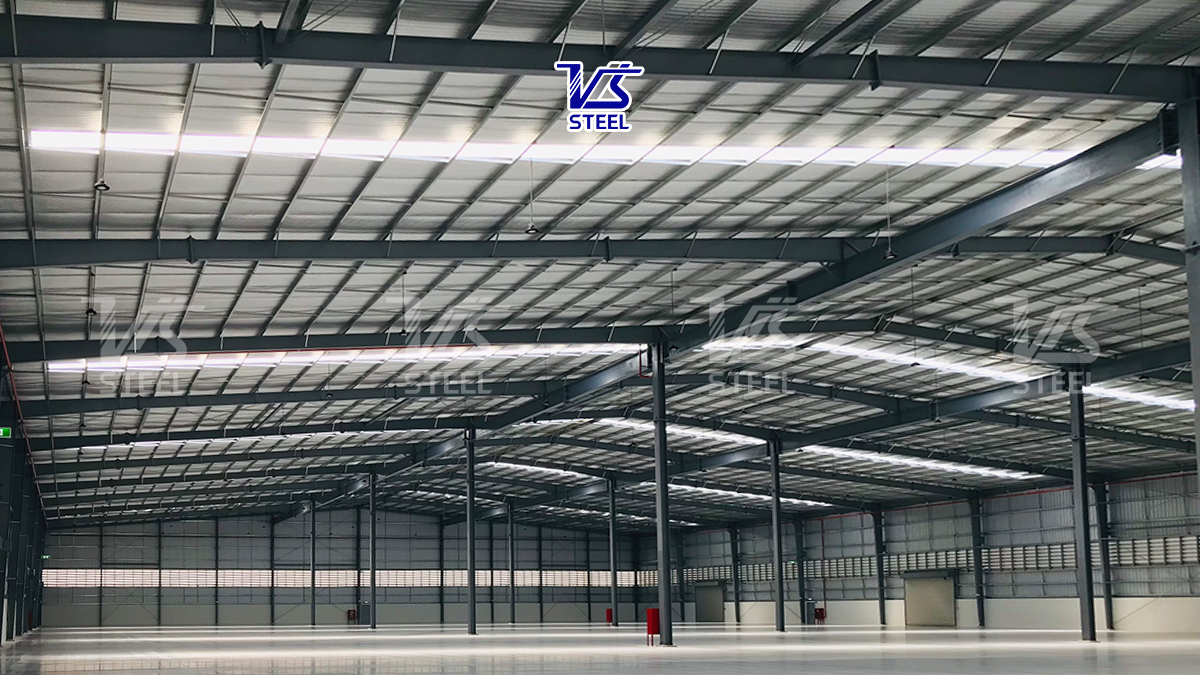
The span is closely related to the load-bearing capacity of the structure. A large span requires a stronger steel frame system to resist lateral forces like wind and storms. Structural engineers will perform detailed calculations to ensure the beams and columns can handle loads from the roof, internal equipment, and especially wind pressure according to current standards, guaranteeing the absolute safety of people and property.
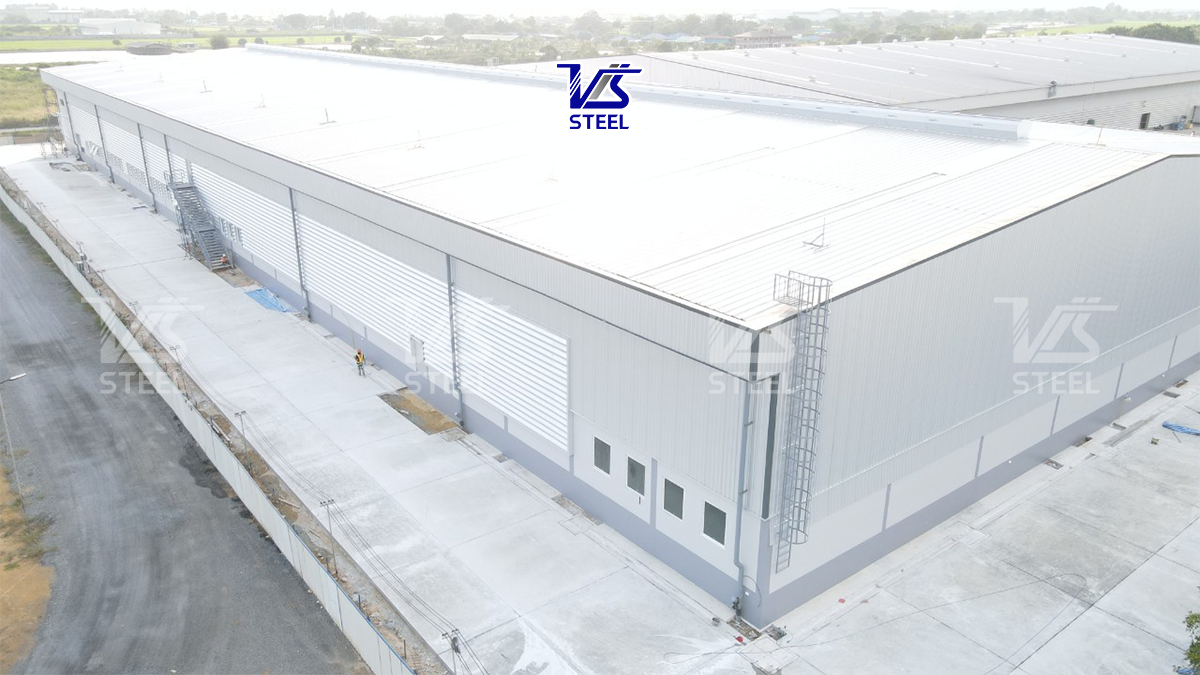
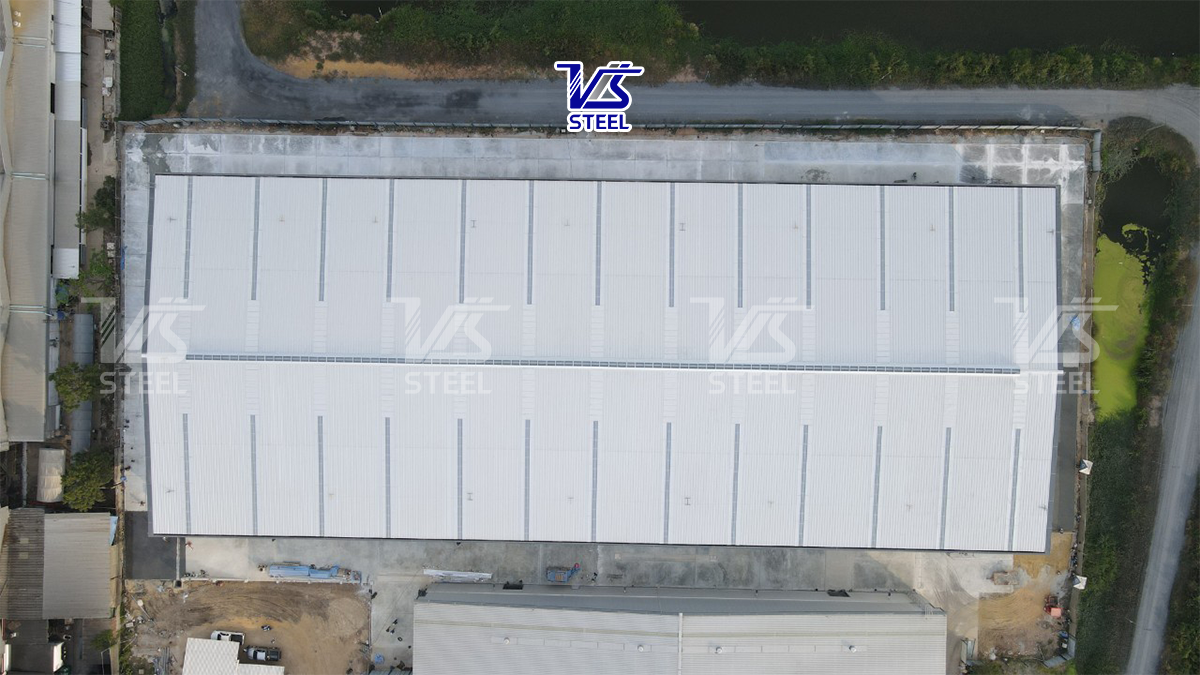
Choosing a span shouldn't be based on guesswork; it must be based on several practical project factors.
The intended use is the first and most important factor.
- Manufacturing Plants: The span will vary depending on the industry (mechanical, textile, food, etc.). For example, an aircraft assembly plant needs a very large span, while a garment factory only needs a moderate one.
- Warehouses: They require a large, open space to arrange goods and allow forklifts to move freely.
- Sports Centers, Exhibition Halls: These need large spans to create open, column-free spaces.
This is a technical factor you can't ignore. If your machinery is large, bulky, or requires frequent movement, the span must be wide enough to allow for unrestricted operation. The weight of the equipment also affects the structural calculations.
Standards like TCVN (Vietnam Standards) or ASTM (American Standards) have specific regulations on wind loads, earthquake loads, and other technical requirements that the designer must follow.
Although not the primary factor, the budget is a real-world limitation. The larger the span, the higher the cost. Therefore, you need to balance your needs with your financial resources.
This is an ideal choice for small and medium-sized industries such as:
- Garment manufacturing: Production lines are compact, with less bulky machinery.
- Food processing: Production lines are neatly arranged and easy to sanitize.
- Small warehouses: Convenient for managing and moving goods.
- Advantages: Lower initial investment costs due to less steel. Construction is also simpler and faster.
This is the most popular span in Vietnam, suitable for most industries.
- Mechanical engineering and manufacturing: Enough space to arrange lathes, milling machines, and assembly areas.
- Light industry: Easy to set up automated production lines.
- Advantages: This is the optimal balance between cost and efficiency. The structure is strong enough to handle loads while providing a spacious, flexible workspace.
This type of span is only used for specific projects that require extremely large spaces without central columns.
- Steel production plants, aircraft manufacturing: Need large spaces for transporting and assembling large components.
- Logistics centers: Maximize storage space and the movement of large forklifts and trucks.
- Advantages: Maximizes workspace, creates an open feel, and is column-free.
Choosing a factory span isn't just a technical decision; it's also a critical economic one. A suitable span will help you save costs, optimize your production space, and ensure the safety of your entire building. Before you start building, be sure to consult with professional engineers to get the best solution for your purpose and budget.
________________
Contact Information
VIS STEEL STRUCTURES COMPANY LIMITED
Address: N11, No. 119, Pho Quang Street, Duc Nhuan Ward, Ho Chi Minh City
Factory: Lot 1G5, CN9 Street, Tan Binh Industrial Park, Vinh Tan Ward, Ho Chi Minh City
Hotline: (+84) 28 354 710 30 - (+84 0274) 3622 213
Email: info@vissteel.com.vn